If you would like a complete copy of the Discovery Level Learning Lounge content, including:
1. How Does Analytical Psychology Explain Personality?
2. What Are the Primary and Auxiliary Types?
3. And Who Started Analytical Psychology?
Process-driven types focus on the world within themselves to evaluate the nature of that inner world. Because they rely primarily on their reasoning, they encounter the existential environment within themselves. In this way, they become like medieval Scholars. They calculate the inward steps they need to take to streamline their cognitive processes against inner risks.
Relationship-driven types focus on the world within themselves to evaluate the nature of that inner world. Because they rely primarily on their emotions, they encounter the individual ways in which people relate. In this way, they become like medieval Troubadours. They focus their energy wherever they can express themselves to become worthy of those who are familiar to them.
Conscience-driven types focus on the world within themselves to know the nature of that inner world. Because they rely primarily on their intuition, they encounter the underlying wilderness, which they explore through their idealistic knowledge. In this way, they become like medieval Firekeepers. They are willing to make communal sacrifices for any task which could bring civil order to their inner lives.
Harmony-driven types focus on the world within themselves to know the nature of that inner world. Because they rely primarily on their senses, they encounter their underlying instincts, which they explore through their tangible knowledge. In this way, they become like medieval Stewards. They aim to balance their inward instinctual awareness with their outward behaviour to maintain harmony and co-operation.
Actuality-driven types focus on the world around themselves to know the nature of that outer world. Because they rely primarily on their senses, they encounter their physical surroundings, which they explore through their tangible knowledge. In this way, they become like medieval Alchemists. They aim to transform their outward sensory awareness into more useful things, such as techniques and technologies.
Principle-driven types focus on the world around themselves to know the nature of that outer world. Because they rely primarily on their intuition, they encounter the surrounding wilderness, which they explore through their idealistic knowledge. In this way, they become like medieval Paladins. They are willing to make personal sacrifices for any service which could bring civic order to their outer lives.
Achievement-driven types focus on the world around themselves to evaluate the nature of that outer world. Because they rely primarily on their emotions, they encounter the communal ways in which people bond. In this way, they become like medieval Champions. They focus their energy wherever they can succeed to earn the approval of those who are significant to them.
Results-driven types focus on the world around themselves to evaluate the nature of that outer world. Because they rely primarily on their reasoning, they encounter the material environment around themselves. In this way, they become like medieval Warriors. They calculate the outward steps they need to take to reinforce their material position against outer threats.
A type-theory of personality says that personality type is innate, but the way that types learn to express themselves depends on the environment in which they develop.
A type-theory might seem to be the mid-point between a biological- and a social-theory of personality. However, a type-theory is more than just a compromise between a biological and a social explanation of personality.
Firstly, a type-theory of personality should explain how personality type is innate.
Analytical Psychology (AP) says that personality emerges from the way the human mind functions. The mind has a limited number of essential functions and a limited number of ways of combining those functions. As a result, only a limited number of personality-types can emerge from the essential functioning of the human mind.
Secondly, a type-theory should explain how the types are likely to interact with their environment because of their innate differences.
AP says that types use the essential functions of the human mind to build their perception of reality. Types which rely on their senses to know what is happening in their environment should develop a sensory perception of reality. And types which rely on their intuition to know what is happening in their environment should develop an idealistic perception of reality.
Researchers also refer to a type-theory of personality as a typology.
Analytical Psychology (AP) says that personality emerges from the way that the human mind functions. To start the process, the mind takes what AP calls an Attitude towards life, which the mind can either Extrovert or Introvert.
From the psychological position of the Attitude, the mind covers what AP calls the two Stages of decision-making. These two Stages are Perceiving and Judging. A mind which focuses on knowing what is happening to a person produces what AP calls a Perceiving Type of personality. And a mind which focuses on evaluating what is happening to a person produces what AP calls a Judging Type of personality.
During the Perceiving Stage, the mind can use either Sensation or Intuition to know what a person is experiencing. AP calls these two Functions the essential Functions of Perceiving. During the Judging Stage, the mind can use either Feeling or Thinking to evaluate what a person is experiencing. AP calls these two Functions the essential Functions of Judging.
To handle the number of choices involved in functioning, the mind relies on what AP calls a Primary Function. The Primary Function can be: 1. either of the two essential Functions; 2. in either of the two Stages of deciding; 3. in either of the two Attitudes towards life. The result is eight Primary Types of personality.
To support the Primary Function, the mind also relies on what AP calls an Auxiliary Function. The Auxiliary Function: 1. should be in the opposite Stage to the Primary Function; 2. can be either of the two Functions in that other Stage; 3. should be in the same Attitude towards life. The result is sixteen Auxiliary Types of personality.
To cover both Stages of deciding, the mind relies on the interaction between the Primary and the Auxiliary Functions. In this way, the mind covers both the Stage of Perceiving what is happening to a person and the Stage of Judging the value to that person of what is happening.
The Personality Mandala (TPM) Type Indicator is a series of Descriptions of personality-driven behaviour, which the Project has written in an adult-level of contemporary English. You should assess each Description according to how little or how much of yourself you can recognise in that Description. Afterwards, the Website sends you an Indication of your personality type according to Analytical Psychology (AP's) type-theory of personality.
An "indication" is a sign which points in a particular direction. As a result, TPM Type Indicator only points towards your most likely personality type according to Analytical Psychology (AP's) type-theory.
To know your AP personality type for certain, you should combine your TPM Type Indication with other forms of self-exploration. You could read explanations of personality-type which Analytical Psychologists have written or you could work with an Analytical Psychologist.
The International Association for Analytical Psychology (IAAP) lists all the Association's member societies. The websites for most of these members have an option to find an Analytical Psychologist in the site’s local area.
Please visit: http://Https://iaap.org/about-the-iaap/member-societies/.
Swiss psychiatrist Carl Jung and Swiss psychologist Emma Rauschenbach started Analytical Psychology (AP) in Switzerland during the first-half of the twentieth century.
Carl was born in rural Switzerland in 1875 to a father who was a parson and Emma was born in industrial Switzerland in 1882 to a father who inherited his family's manufacturing businesses.
After Carl finished secondary school, he studied medicine in the Swiss university town of Basel. When Emma finished secondary school, she wanted to study at university, but the Rauschenbach family expected her to prepare for marriage and motherhood instead.
Carl and Emma married in 1903, the year after Carl earned his PhD in Psychiatry from the University of Zürich. At the time, Carl was an Assistant Physician at the Burghölzli Psychiatric Hospital in Zürich. As a result, he and Emma had to live in residence.
From the outset, Emma helped Carl with his work. She also did her own reading at the Zürich Library, where she followed her interest in the medieval Grail Legends. She also had their first three children.
In 1909, Carl resigned from the Burghölzli and they moved to the shore of Lake Zürich. While he established a private practice at home, Emma had their last two children. In between, she also helped to organise the Third Psychoanalytical Congress in Weimar and accompanied Carl to the event.
In 1916, Carl produced his first mandala drawing. In the same year, he started The Psychology Club in Zürich and began to refer to his approach as Analytical Psychology (AP). Emma became the first President of the Psychology Club and maintained that role until 1920.
In 1921, Carl produced his explanation of the Personality Type-Theory of AP. In 1923, HG Baynes translated the book from Swiss-German into English as Psychological Types. In 1928, Carl produced the first edition of Two Essays on Analytical Psychology, which introduces his School of Psychology. For the remainder of his career, Carl analysed his clients and shared his findings.
As their five children grew, Emma worked more as an Analytical Psychologist. From 1930, she analysed her own clients. In 1931, she had published her two essays Animus and Anima, which explain the gender-theory of AP. She also began to apply AP to her study of the Grail Legends.
In 1955, Emma passed away, bringing her 52-year partnership with Carl to an end. In 1960, her colleague Marie-Louise von Franz completed and had published Emma's psychological analysis of the Grail Legends.
After Emma passed, Carl did not remarry. He lived at Küsnacht until he passed in 1961, leaving the Jung-Rauschenbach legacy to the five children and the 19 grandchildren he shared with Emma.
Other theories of personality include trait-, biological-, and social-theories.
What is a trait-theory of personality?
A trait-theory of personality is one that says all human beings possess similar behavioural characteristics or traits, such as sociability. The degree to which individuals express these characteristics or traits determines their adult personality, such as being more or less social.
In other words, a trait-theory attempts to measure the degree to which an individual expresses each of these common human characteristics or traits. A trait-theory is an attractive one because the model appears to give us an objective, and therefore, measurable indication of personality.
What is a biological-theory of personality?
A biological-theory of personality is one that says all human behaviour is the result of how the cells in the human brain work. The type of chemicals in the brain determines how these cells develop and function; therefore, neurochemicals determine personality.
In other words, a biological-theory of personality attempts to measure the type and amount of chemicals in the brain and their effect on brain functioning. A biological-theory is an attractive one because the model explains why groups behave consistently within themselves but differently in comparison with each other, such as children, adults and the elderly.
What is a social-theory of personality?
A social-theory of personality is one that says all human beings are born into early-learning environments which are different in some way. The quality of attention which children receive from their caregivers during their early-learning years determines their adult personalities.
In other words, a social-theory attempts to discover how caregivers treat children during their early development and how that treatment continues to affect them in their adulthood. A social-theory is an attractive one because the model appears to explain why people show a subtle range of differences in their behaviour.
To produce The Personality Mandala (TPM’s) eight Primary Types of personality, TPM combines Analytical Psychology (AP’s) two Attitudes towards life with each of the four Primary Functions. TPM refers to the four Perceiving Types of AP as the four Knowing Types of TPM and the four Judging Types of AP as the four Evaluating Types of TPM.
To produce The Personality Mandala (TPM’s) sixteen Auxiliary Types of personality, TPM combines Analytical Psychology (AP’s) two Attitudes towards life with each of the four Primary Functions, and again with each of the two possible Auxiliary Functions.
TPM refers to the eight Knowing Auxiliary Types as:
And TPM refers to the eight Evaluating Auxiliary Types as:
The Personality Mandala (TPM) is a privately-owned Project which does independent research into Analytical Psychology (AP's) type-theory of personality.
Why does SCPublishing operate the Research Project privately?
SCPublishing owns and funds the Project privately for two reasons: Firstly, to conduct objective research into personality-type theory and development according to Analytical Psychology (AP); and secondly, to publish the findings of this research, so that adults can learn how to understand themselves and each other better.
What are the Research Project's core values?
The Personality Mandala (TPM) Research Project believes that all adults should have an accurate and affordable Indication of their personality-type according to Analytical Psychology (AP's) type-theory of personality.
What is the Research Project's core mission?
The Project aims to make The Personality Mandala (TPM) Type Indicator available to all adults who have these three requirements: 1. An adult-level of understanding of written English; 2. A device with a screen which can connect to the Internet; 3. And a mobile phone to verify and protect their individual information.
Who is SteamCrossing (SC)Publishing?
SteamCrossing (SC)Publishing is a trading-division of The Steam Crossing Company Limited (SteamCrossingCo [SCC]), a UK-based micro-business which helps adults to live, learn and grow.
What are SteamCrossingCo’s core values?
Safety: SteamCrossingCo (SCC) believes in 100% safety for 100% of people 100% of the time.
Freedom: Within this context of unconditional safety, SteamCrossingCo (SCC) believes in the right of all people to think, speak and decide for themselves.
Responsibility: Within this context of unconditional freedom, SteamCrossingCo (SCC) believes in the responsibility of all people to listen, understand and respond appropriately if their thoughts, words or decisions make others unsafe.
The Personality Mandala (TPM) Name, Diagram, Type Indicator, Type Calculation, Type Names, Type Descriptions, Anonymous Demographic Research Questionnaire and Learning Lounge Content are all Copyright © SCPublishing 2023.
You may use The Personality Mandala (TPM) Research Project for your personal development only. You may not copy, download, alter, translate, store, distribute, trade or do research with any aspect of the Project.
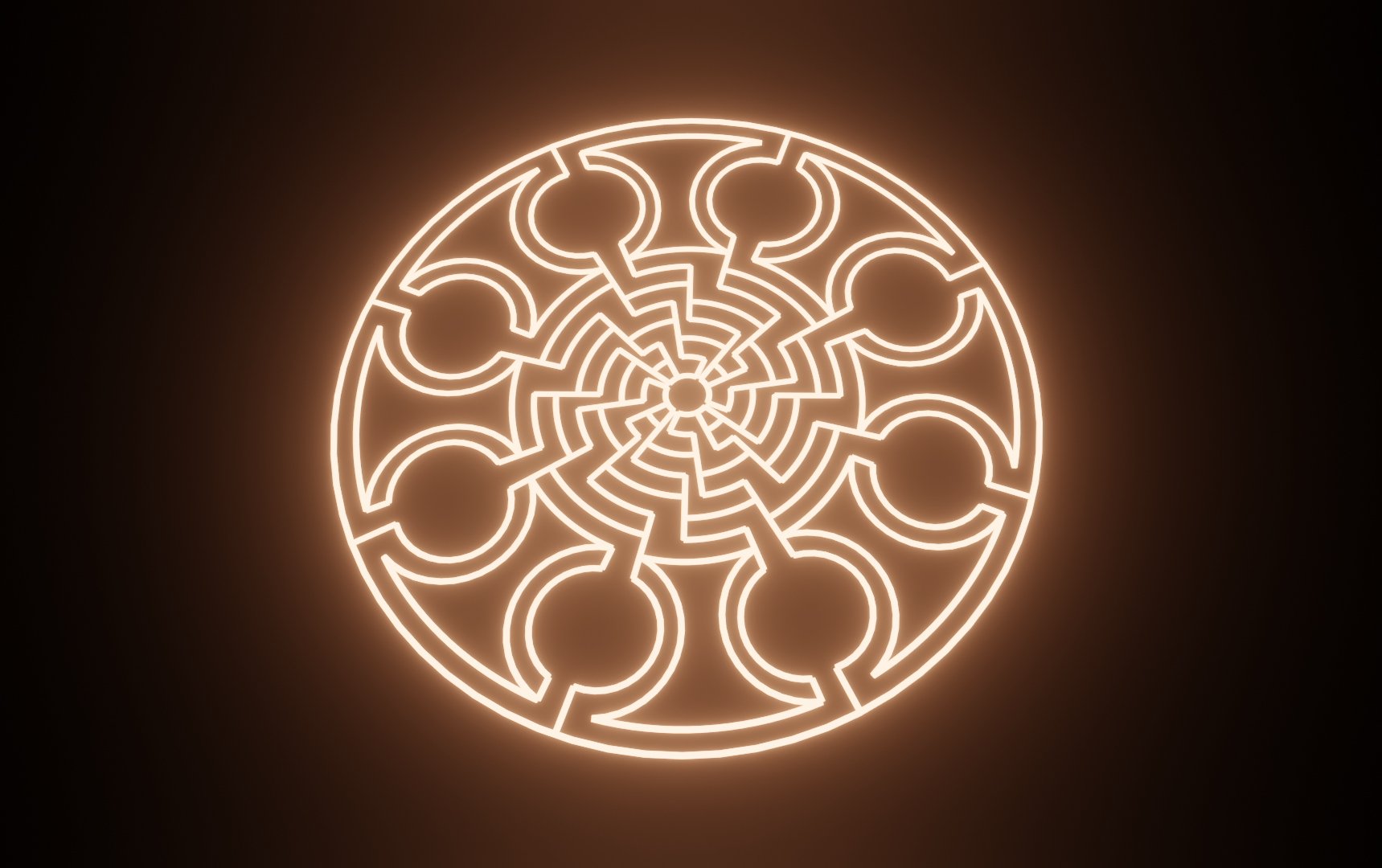
The word "mandala" comes from a Sanskrit word meaning "circle". Some Hindus and Buddhists use mandalas as part of their religious rituals. Some of these practitioners also use mandalas to facilitate their meditation. The discipline of meditation teaches these devotees how to become more physically and mentally aware.
Swiss psychiatrist Carl Jung studied mandalas and explored their relationship to what the Vedic religions refer to as self-actualisation. Along with his partner, Swiss psychologist Emma Rauschenbach, Carl was one of the co-founders of Analytical Psychology (AP).
Carl produced his first mandala painting in 1916 (Jung, Carl. Letters of CG Jung: 1906-50 Vol 1. 1973. Kindle Edition. L274.) and continued to produce mandalas for the remainder of his life. Carl also integrated producing mandalas into AP's therapeutic practice. AP uses the term Individuation to refer to the process of self-actualisation and considers the outcome of Individuation to be integration or wholeness.
The Personality Mandala (TPM) Research Project believes that our personality type is innate and habitual whereas we acquire and construct our Type Expression. The Research Project also believes that all of us are capable of deconstructing our learnt patterns of behaviour and becoming mindful of our habitual ways of processing experience. As we move past our personality type and towards the core of our humanity, we find ways to bring our full human potential into being.
The Personality Mandala (TPM) Diagram is a trademark of SteamCrossing (SC)Publishing. You may use The Personality Mandala (TPM) Research Project for personal development only. You may not copy, download, alter, translate, store, distribute, trade or do research with any aspect of the Project.
THE PERSONALITY MANDALA © SCPUBLISHING | 2023 | ALL RIGHTS RESERVED